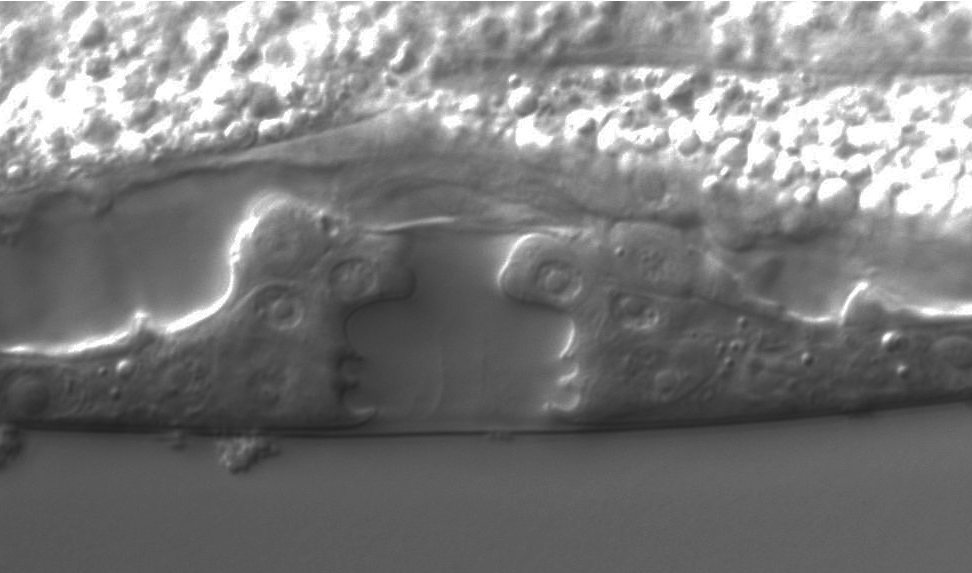
Genotype-phenotype map: from developmental variation to life history variation
How complex traits, such as life history traits, developmentally emerge through integration of numerous gene-environment, gene-gene interactions, and higher-order interactions among cells and tissues, remains largely unknown. We therefore study the nematode hermaphrodite germline to ask how variation in different parameters of this developmental system translates into variation in reproductive life histories – depending on variable genetic and environmental contexts. Here, one principal goal is to establish causal connections between reaction norms at molecular-developmental levels and reaction norms at the life history level. This research objective includes quantification of allometry and developmental timing of both germline and soma to examine how life history traits are shaped by integration and trade-offs of components of the underlying developmental system architecture.